
How to Write the University of Southern California Supplemental Essays (2025–2026)
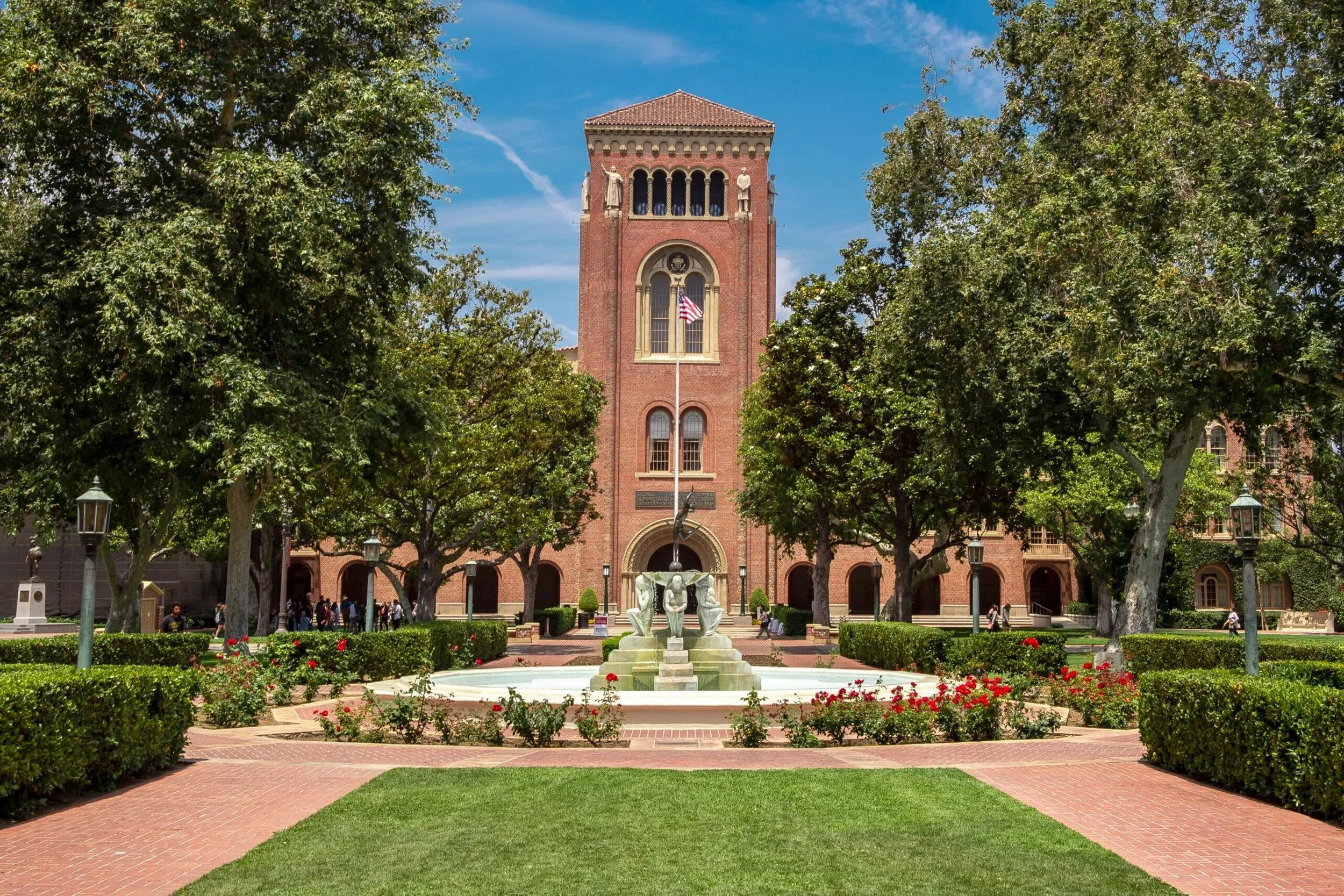
University of Southern California Supplemental Essay Prompts
USC asks applicants to respond to a range of supplemental questions, including:
A 250-word academic “Why Us” essay
A set of short-answer questions
Additional 250-word essays for specific programs (Viterbi, Dornsife, etc.)
What USC Is Actually Asking
USC’s supplementals are not testing one single skill. They’re testing whether you can adjust your thinking across very different types of questions while staying specific and grounded.
Some of the prompts are straightforward. Others are more open-ended. Some are extremely short. The difficulty is not understanding what they’re asking—it’s avoiding answers that feel generic, inflated, or interchangeable.
Most students fall into the same trap: they treat all of these essays the same way. They either become overly formal and abstract, or they try to “stand out” in ways that feel forced.
Strong responses do something simpler. They take each question seriously, answer it directly, and use the limited space to say something specific and real.
The “Why USC?” Essay
Prompt:
Describe how you plan to pursue your academic interests and why you want to explore them at USC specifically. Please feel free to address your first- and second-choice major selections.
Word limit: 250 words
This is a classic “Why Us” essay, but the 250-word limit changes how you approach it.
You don’t have space for a hook. You don’t have space for a long setup. And you definitely don’t have space to wander.
A common mistake is to start with USC—what you like about it, what excites you, what makes it appealing. Even when students are specific, this often feels thin, because the essay is built outward from the school rather than inward from the student.
A stronger approach starts with you.
What are you actually interested in studying? Not the label (“business,” “engineering,” “biology”), but the underlying questions, problems, or ideas that hold your attention. How did those interests develop? What have you already done to explore them?
Once that’s clear, USC becomes relevant. You’re not listing features of the university—you’re showing how those features extend something that already exists in your thinking.
Because the word limit is so tight, you have to make decisions. You cannot cover everything. It’s better to develop one clear line of thought than to gesture toward multiple interests without depth.
Students also get caught on the “first- and second-choice major” language. If you genuinely have two interests, you can mention both. But don’t treat them as equal if they aren’t. And don’t force a second interest just because the prompt allows it.
The goal here is simple: sound like someone who has thought seriously about what they want to do, and who understands how a place like USC would allow them to do it.
Short Answer Questions
Prompts:
Describe yourself in three words. (25 characters per word)
What is your favorite snack?
Best movie of all time
Dream job
If your life had a theme song, what would it be?
Dream trip
What TV show will you binge watch next?
Which well-known person or fictional character would be your ideal roommate?
Favorite book
If you could teach a class on any topic, what would it be?
(Questions 2–10: 100 characters each)
These are easy to overthink.
You are not going to get into USC because of your favorite snack. There are not “better” snacks in the context of admissions. At the same time, you don’t want to give answers that feel empty or disengaged.
The goal is to answer directly while showing a bit of specificity or personality. A one-word answer is usually too thin. But trying too hard to be clever or quirky is worse.
Students sometimes spend an unreasonable amount of time on these because they feel exposed by the informality. That’s a mistake. These matter less than the longer essays.
Answer them cleanly. Show that you’re paying attention. Then move on.
Viterbi Applicants: Distinct Contribution
Prompt:
The student body at the USC Viterbi School of Engineering is a diverse group of unique engineers and computer scientists who work together to engineer a better world for all humanity. Describe how your contributions to the USC Viterbi student body may be distinct from others.
Word limit: 250 words
Most students don’t read this prompt carefully enough.
The key word is distinct.
This is not asking you to describe your interests in engineering. It’s asking you to explain what you would bring that is meaningfully different from other applicants.
There are a few ways to approach this. You might focus on a specific project that reflects a particular kind of thinking. You might draw on some aspect of your background or experience that shapes how you approach problems. Or you might identify a specific area within engineering that you’ve engaged with in a way that isn’t generic.
What matters is that you isolate one thing and develop it clearly.
Another common mistake is to echo the language of the prompt—“engineering a better world,” “helping humanity,” and so on. That language belongs to USC. If you rely on it too heavily, your essay will sound like it’s coming from their website, not from you.
Instead, show through your example how your work or interests would translate into a meaningful contribution. If the connection is clear, you don’t need to repeat their phrasing.
Engineering & Computer Science: Grand Challenges
Prompt:
The National Academy of Engineering (NAE) has identified 14 Grand Challenges. Choose one and explain why it is the most important to you.
Word limit: 250 words
There is no right answer here.
All fourteen challenges are significant. Trying to argue that one is objectively “the most important” usually leads to generic reasoning that could apply to any of them.
What USC is actually looking for is your connection to the problem.
Why does this challenge matter to you specifically? What have you seen, experienced, or thought about that draws you to it? What have you already done—or begun to explore—that relates to it?
A weak response treats this as an abstract exercise. A strong response treats it as personal.
You’re not being evaluated on whether you picked the “correct” challenge. You’re being evaluated on whether your answer feels grounded and specific.
Dornsife Applicants: The “10-Minute Talk”
Prompt:
If you had ten minutes and the attention of a million people, what would your talk be about?
Word limit: 250 words
This is the most open-ended prompt USC asks, and it’s easy to misunderstand.
Because it feels broader, students often default to large, familiar topics—climate change, inequality, global conflict—and then explain why those issues matter. The problem is that these responses tend to be predictable.
A stronger response focuses on something narrower and more specific.
That might still be connected to a larger issue, but the essay itself should not try to cover the entire topic. It should show how you think about one part of it, or how you’ve engaged with it in a way that isn’t obvious.
You’re not writing the talk itself. You’re describing what it would be about and why it matters to you.
This is one place where a bit more personality or creativity can come through. But even here, specificity matters more than performance. If the idea is clear and genuinely yours, that will carry more weight than trying to sound impressive.
Common Mistakes Students Make
1. Treating all prompts the same way
USC’s supplementals are varied. They require different approaches.
2. Starting with the school instead of themselves
This is especially common in the “Why Us” essay.
3. Relying on generic or inflated language
Phrases like “making the world a better place” or “perfect fit” don’t distinguish you.
4. Overthinking the short answers
They matter less than students think.
5. Choosing obvious topics for open-ended prompts
Predictable choices lead to predictable essays.
Final Thought
USC’s supplemental essays are not about any single perfect response. They are about whether you can think clearly, answer directly, and avoid the kinds of generic responses that admissions officers see over and over again.
If your essays are specific, grounded, and actually respond to the question being asked, they will stand out more than anything that tries too hard to impress.
You can find more supplemental essay guides here:
College Essay Supplemental Guides →
Want Help Thinking This Through?
USC’s essays require you to shift between different kinds of writing quickly—structured academic responses, short answers, and more open-ended prompts.
If you’re finding it difficult to keep your responses clear and specific across all of them, we work with students to refine and strengthen each part of the application.
You can learn more about our approach here:
College Essay Coaching →