
How to Write the Boston University Supplemental Essays (2025–2026)
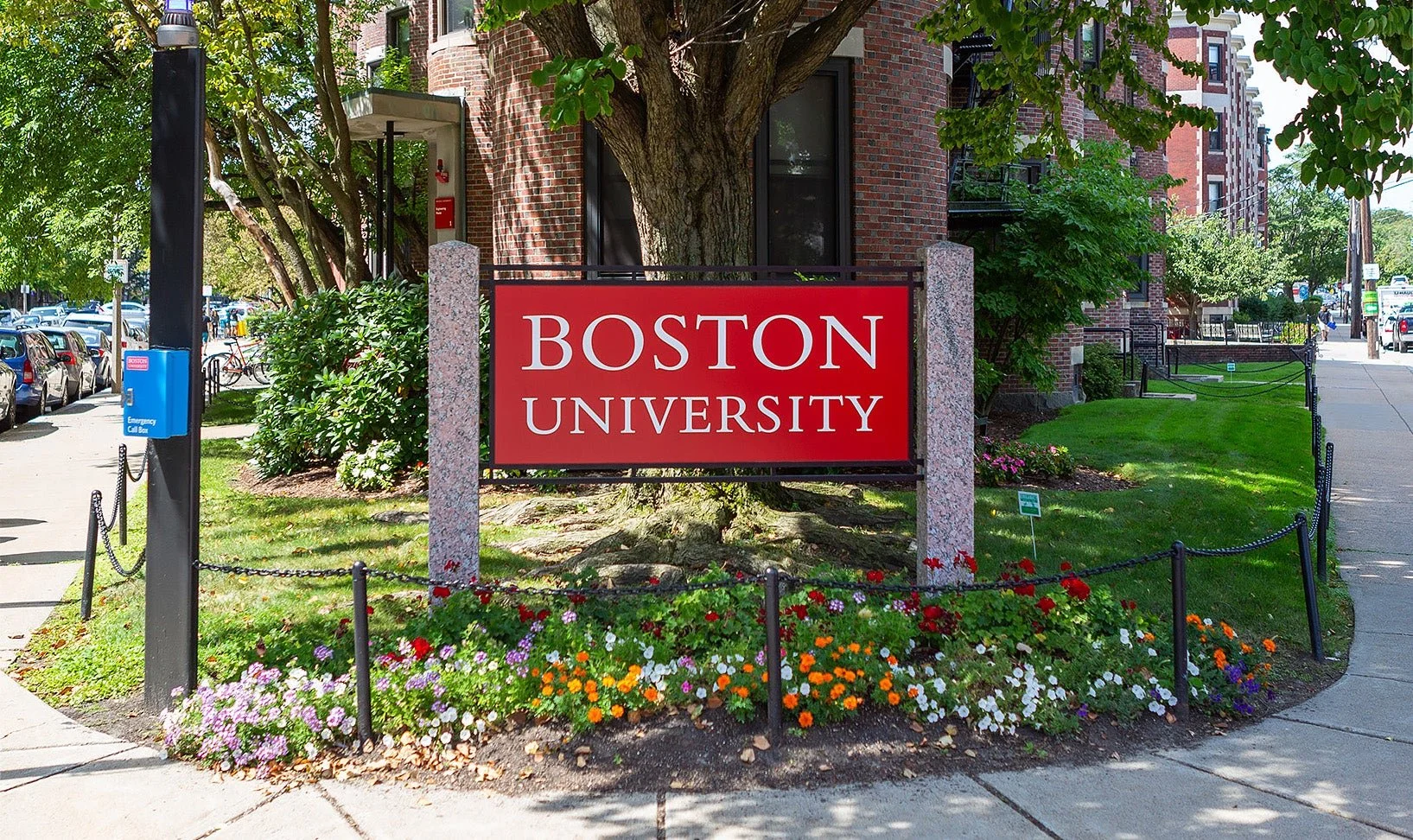
Boston University Supplemental Essay Prompts
Boston University asks applicants to respond to one of two prompts. The first asks you to reflect on a social or community issue that matters to you and to explain how you have engaged with it. The second asks what excites you about being a student at Boston University and how you would contribute to the campus community. Both are limited to 300 words.
At a basic level, the choice is between writing about something you have already done and writing about how you would engage in a new environment. The prompts are not interchangeable, and the strength of your response depends largely on choosing the one that allows you to be most specific.
What Boston University Is Actually Asking
These two prompts are built around different kinds of thinking. The first is grounded in action. It asks whether you have engaged meaningfully with an issue and whether you can explain that engagement clearly. The second is forward-looking. It asks whether you can imagine yourself in a particular environment and describe how you would take part in it in a way that feels real.
In both cases, the challenge is the same: avoiding generalities. With 300 words, there is very little room for framing or abstraction. Strong responses move quickly into something concrete and stay there.
The Social or Community Issue Essay
This prompt works best when it is treated as a question about action rather than opinion. Many students approach it by explaining why an issue matters in general terms, but that usually leads to writing that feels abstract and unfocused. What matters here is not the importance of the issue itself, but what you have actually done in response to it.
A strong response identifies a specific issue and then develops a clear account of your involvement. What did you do? How did you approach it? What decisions did you make along the way? The scale of the activity is less important than the clarity of your engagement. A small, well-explained example will almost always be more effective than a broad but vague one.
Because the word limit is relatively tight, there is no advantage in spending time on long introductions or general reflections. The essay should move quickly into the experience itself and use the space to make your actions and thinking visible. This prompt is most effective for students who have sustained, concrete involvement in a particular issue. If your experience is more limited or less clearly defined, the second prompt may allow you to present a stronger application.
The Campus Contribution Essay
The second prompt is not a standard “Why Us” essay. You are not being asked to explain why Boston University appeals to you in general terms, but to show how you would take part in the life of the university and what you would bring to it.
Students often fall into predictable patterns here, describing the school broadly or listing clubs and opportunities without explaining their relevance. Both approaches lead to generic responses. A more effective approach begins with you. What are you actually interested in? What kinds of communities or activities do you gravitate toward? What have you already done that reflects those patterns?
Once that is clear, Boston University becomes relevant. The essay should identify specific environments—organizations, initiatives, or forms of participation—where the way you already engage would continue and develop. Simply naming a club or program is not enough. The connection has to be explained. Why does this environment fit the way you think or act? What would you actually do within it?
Responses that focus only on academics tend to feel thin here, because the prompt is about participation rather than study. The goal is to show a consistent pattern in how you engage and to make it clear how that pattern would take shape in a specific setting.
Common Mistakes Students Make
Treating the first prompt as an opinion essay
Writing about an issue in general terms without clearly explaining what you did.Trying to cover too many issues or activities
Losing focus instead of developing one example in detail.Writing generic “Why Us” responses for the second prompt
Describing the university rather than showing how you would engage with it.Listing clubs or opportunities without context
Mentioning activities without explaining why they fit your interests or behavior.Using abstract or overly polished language
Replacing clear explanation with vague phrases about “impact” or “giving back.”
Final Thought
These prompts are designed to do different things. One asks you to show how you have already acted on something that matters to you. The other asks how you would continue that kind of engagement in a new environment.
In both cases, the strongest responses are specific, grounded, and focused on how you think and act, rather than on how you want to present yourself.
You can find more guides to supplemental essays here:
College Essay Supplemental Guides →
Want Help Thinking This Through?
Choosing between these two prompts—and then executing it clearly—matters more than it might seem.
If you’re unsure which direction gives you the strongest material, we work with students to identify the better option and develop responses that feel specific, grounded, and coherent.
You can learn more about our approach here:
College Essay Coaching →